
Beef Tallow Market Size to Surpass USD 7.8 Billion by 2034 at 7.1% CAGR Amid Growing Consumer Preference for Traditional Animal-Based Fats
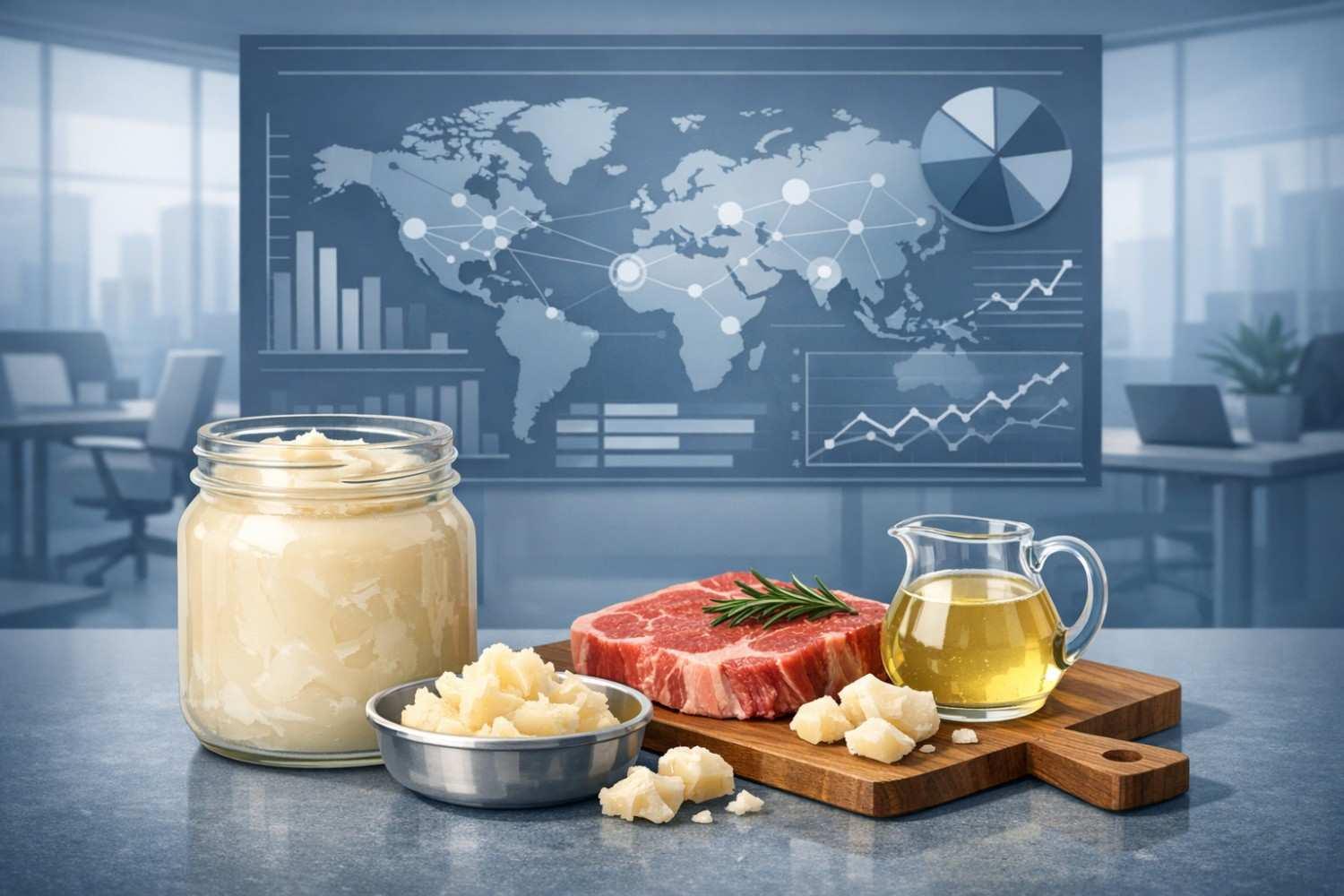
The Renaissance of an Ancient Fat: A Comprehensive Analysis of the Global Beef Tallow Market
Once a staple in every kitchen and a base for countless household products, beef tallow is experiencing a remarkable resurgence. Driven by a convergence of dietary trends, a clean beauty movement, and a search for sustainable alternatives, this traditional animal fat is finding new life in modern applications. According to a detailed report by Facts & Factors, the global beef tallow market is on a strong growth path, projected to increase from USD 4.2 billion in 2025 to USD 7.8 billion by 2034, expanding at a compound annual growth rate (CAGR) of 7.1%.
This article provides an in-depth analysis of the global beef tallow market, exploring its key grades, diverse applications, and the trends driving its revival from a byproduct to a sought-after ingredient.
What is Beef Tallow?
Beef tallow is rendered fat, typically sourced from the hard white fat (suet) around the kidneys and loins of cattle. Through a process of melting, purification, and sometimes filtration, it becomes a stable, semi-solid fat prized for its unique properties. The market is segmented by the grade of tallow, which determines its application:
-
Food Grade (58% Market Share): The dominant segment, driven by tallow’s culinary revival. It is valued for its high smoke point (400-420°F), clean flavor, and stability, making it excellent for frying, roasting, and baking.
-
Cosmetic Grade: A refined, deodorized, and often bleached tallow used in skincare and personal care products. It is prized for its similarity to human sebum and high vitamin content.
-
Industrial Grade: Used in applications like soap and candle making, animal feed, lubricants, and as a feedstock for biodiesel.
Key Market Drivers: Diet, Beauty, and Sustainability
The robust growth of the beef tallow market is driven by a powerful combination of consumer-led movements in food and personal care.
-
The Resurgence of Animal Fats in Modern Diets: This is the single most powerful driver. The rise of keto, paleo, carnivore, and ancestral eating patterns has led consumers to rediscover traditional animal fats like tallow. Perceived as a “clean label,” whole-food ingredient, tallow is being actively sought out as a healthier alternative to highly processed seed oils. Social media influencers and functional medicine advocates have been instrumental in this shift, driving demand from both home cooks and restaurants. The cooking & frying application dominates with 52%, and premium food chains are now marketing “tallow-fried” items as a quality differentiator.
-
The Clean Beauty and Natural Skincare Boom: This is the fastest-growing driver. Tallow’s molecular structure is remarkably similar to human sebum, allowing it to moisturize without clogging pores. Rich in vitamins A, D, E, and K, it has become a hero ingredient in the natural skincare community. A wave of indie brands has built successful businesses on tallow-based balms and creams, creating explosive growth in the cosmetic-grade segment, which commands premium pricing.
-
Demand for Sustainable and Natural Alternatives: Increasing scrutiny of palm oil (linked to deforestation) and synthetic ingredients is pushing manufacturers in soap, candle, and industrial applications to consider tallow as a renewable, locally-sourced alternative. This, combined with its stable supply chain tied to the beef industry, provides a solid foundation for industrial demand.
Market Segmentation: Food Grade and Cooking Lead
The market segmentation clearly illustrates the dominance of tallow’s traditional culinary use and the rapid emergence of high-value personal care applications.
By Grade: The Reign of Food Grade
-
Food Grade (58% Market Share): This segment’s leadership is a direct result of the dietary revival. Its large volume is driven by both direct-to-consumer sales of cooking fat and its use in commercial food service and packaged products (like snacks and prepared meals).
-
Cosmetic Grade (22% Market Share): The second-largest and fastest-growing segment. While much smaller in volume, it contributes significantly to market value due to substantially higher prices and strong growth in the direct-to-consumer (D2C) and indie brand space.
By Application: Cooking & Frying is the Core Engine
-
Cooking & Frying (52% Market Share): This application is the engine of the market, benefiting from the most visible consumer trend and generating the largest volume demand.
-
Cosmetics & Personal Care (20% Market Share): The fastest-growing application, driven by social media trends, premium pricing, and strong repeat-purchase behavior. It is rapidly becoming a significant value driver.
-
Soap & Candles and Animal Feed: These are traditional, stable industrial applications that provide a consistent baseline demand for tallow.
Regional Landscape: North America Leads the Revival
-
North America (38% Market Share): The region is the global leader, with the United States at its core. This dominance is driven by the most active and influential ancestral diet communities (keto, carnivore), the highest concentration of direct-to-consumer tallow brands (like Fatworks, EPIC), and the strong adoption of “tallow-fried” items by premium burger chains and restaurants. The clean beauty movement is also exceptionally strong here.
-
Europe: A significant market with strong demand in both food and cosmetic applications. Germany has a long tradition of using tallow in soap and candles, while France values it in gourmet cooking, and the UK has a growing keto and natural skincare community.
-
Asia Pacific: A rapidly growing market, primarily for food and industrial applications. China and South Korea are key, with demand for imported premium tallow for high-end cooking and, increasingly, for natural skincare.
Challenges in the Market
Despite its strong growth, the market navigates significant headwinds.
-
Historical Perception as “Unhealthy”: Decades of public health messaging demonizing saturated fats still influence many consumers, dietitians, and institutions. Overcoming this perception and educating new generations on the nuances of dietary fat is an ongoing challenge.
-
Supply Chain Tied to Beef Production: Tallow supply is inextricably linked to the beef industry, which fluctuates with cattle cycles, feed costs, and slaughter rates. High-quality, grass-fed tallow, which commands a premium, is even more supply-constrained.
-
Competition from Plant-Based Oils: In the broader market, tallow faces intense price competition from cheaper, commodity vegetable oils (like palm and soybean), which are deeply entrenched in industrial food manufacturing.
Future Opportunities: Premiumization and Brand Building
The future of the beef tallow market lies in moving beyond a commodity ingredient to a branded, premium product.
-
Premium, Grass-Fed, and Certified Products: The biggest opportunity is in creating premium products for discerning consumers. Grass-fed, certified organic, and regeneratively sourced tallow can command significantly higher prices in both food and cosmetic markets, appealing to values-driven buyers.
-
Branded Consumer Products: The success of companies like Fatworks and EPIC Provisions shows the power of branding. Moving beyond bulk commodity sales to create packaged cooking fats, cooking sprays, and ready-to-use skincare products allows suppliers to capture a larger share of the consumer dollar.
-
Expansion in Personal Care: The trend toward tallow-based skincare is still in its early stages. There is a massive opportunity for established personal care companies to enter this space with refined, high-quality tallow-based products, and for ingredient suppliers to offer standardized cosmetic-grade tallow at scale.
Competitive Landscape
The beef tallow market is a mix of large global agribusiness firms and small, agile, direct-to-consumer brands. Major players include protein giants like Cargill, Tyson Foods, and JBS USA, which supply tallow as a byproduct, and industrial renderers like Darling Ingredients. The growth in premium and retail segments is driven by smaller brands like Fatworks, EPIC Provisions, and Vintage Tradition, which have successfully built a following around grass-fed, high-quality tallow.
For the full report, detailed data tables, and additional insights, visit: https://www.fnfresearch.com/beef-tallow-market
In conclusion, the global beef tallow market is undergoing a fascinating renaissance, transforming from a simple industrial byproduct into a coveted ingredient in the premium food and clean beauty spaces. By capitalizing on powerful consumer trends toward ancestral eating and natural ingredients, the market is well-positioned for strong and diversified growth.

 English
 Arabic
 French
 Spanish
 Portuguese
 Deutsch
 Turkish
 Dutch
Dutch
 Italiano
 Romaian
 Portuguese (Brazil)
 Greek
Greek