
Understanding MPLS Technology and Its Role in Modern Networking
Introduction and Market/Industry Overview:
Multiprotocol Label Switching, commonly known as MPLS, is a widely adopted networking technology designed to improve the speed, efficiency, and reliability of data transmission across enterprise and service provider networks. It operates between traditional network layers, enabling data packets to move through predefined paths rather than relying solely on conventional IP routing. Over the years, MPLS has become a foundational component of modern wide area networks, particularly for organizations that require consistent performance, predictable latency, and high levels of service quality. Its ability to support diverse traffic types has made it a trusted solution for mission-critical communication.
Key Concepts and Core Components:
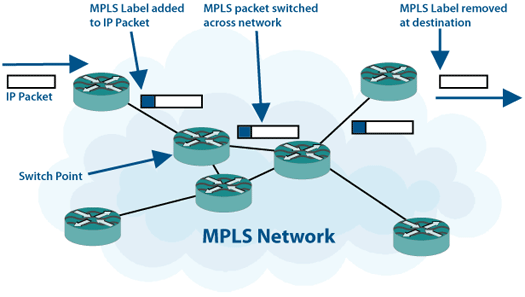
At its core, MPLS works by assigning short labels to data packets, which determine how those packets are forwarded through the network. Instead of analyzing complex IP headers at every router, MPLS-enabled devices use these labels to make faster forwarding decisions. Key components include label edge routers, which add and remove labels, and label switch routers, which forward packets based on label information. This architecture simplifies routing processes and enables advanced traffic management features such as traffic prioritization and path control, making networks more efficient and easier to manage.
Applications and Use Cases Across Industries:
MPLS is widely used across industries that depend on stable and secure connectivity. In the banking and financial sector, it supports real-time transactions and secure data transfers between branches and data centers. Healthcare organizations rely on MPLS for transmitting sensitive patient data and supporting telemedicine applications with minimal delay. Retail chains use MPLS to connect stores, warehouses, and headquarters, ensuring consistent performance for point-of-sale systems and inventory management. Manufacturing and logistics companies also benefit from MPLS by maintaining reliable communication across distributed operations.
Growth Drivers and Opportunities:
Several factors continue to drive the adoption of MPLS solutions. Enterprises increasingly require guaranteed performance for applications such as voice, video conferencing, and enterprise resource planning systems. MPLS offers strong quality-of-service capabilities, making it well-suited for these needs. The rise of digital transformation initiatives has also created opportunities for MPLS to serve as a dependable backbone for hybrid networks. Additionally, organizations with global operations often choose MPLS for its ability to deliver predictable performance across geographically dispersed locations.
Challenges, Risks, and Limitations:
Despite its advantages, MPLS is not without challenges. Deployment and maintenance can be complex, requiring specialized expertise and careful network planning. Costs associated with dedicated MPLS links can be higher compared to some alternative networking approaches. Scalability may also become a concern for rapidly growing organizations with dynamic connectivity needs. Furthermore, as application architectures evolve toward cloud-native models, traditional MPLS networks may require integration with newer technologies to remain flexible and cost-effective.
Emerging Trends and Innovations:
The evolution of enterprise networking has influenced how MPLS is used today. Many organizations are integrating MPLS with software-defined networking and cloud connectivity solutions to create more agile hybrid environments. This approach allows MPLS to handle critical traffic while other technologies support less sensitive workloads. Automation and centralized network management tools are also enhancing the efficiency of MPLS operations. These innovations help organizations maintain the reliability of MPLS while adapting to changing business requirements.
Regional or Industry-Wise Insights:
Adoption patterns for MPLS vary across regions and industries. Developed markets often use MPLS as part of sophisticated multi-network strategies, combining it with newer connectivity models. In emerging economies, MPLS remains a preferred option for enterprises seeking dependable wide area connectivity. Industry-specific requirements also influence usage, with sectors such as finance, telecommunications, and government continuing to prioritize MPLS for its security and performance characteristics. These variations highlight the technology’s adaptability across different operational contexts.
Future Outlook:
Looking ahead, MPLS is expected to maintain its relevance as a core networking technology, particularly for organizations that value reliability and performance assurance. While alternative networking models are gaining attention, MPLS continues to evolve through integration with modern network architectures. Its role is shifting from a standalone solution to a strategic component within hybrid and multi-cloud environments. In conclusion, MPLS remains a trusted and proven technology, offering enterprises a balanced combination of efficiency, control, and dependability to support current and future connectivity needs.
Top Trending Reports -
South Korea Graph Database Market Trends

 English
 Arabic
 French
 Spanish
 Portuguese
 Deutsch
 Turkish
 Dutch
Dutch
 Italiano
 Russian
 Romaian
 Greek
Greek